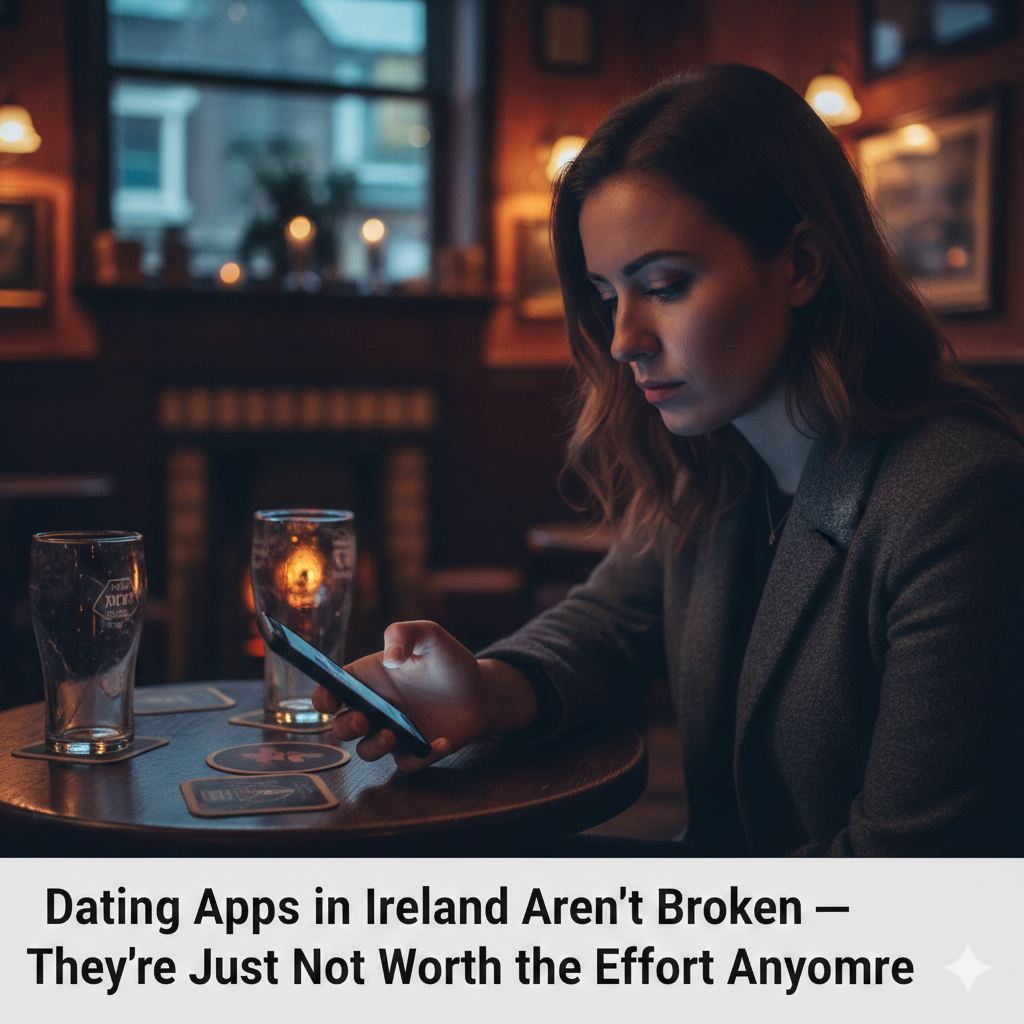
Dating Apps in Ireland Aren’t Broken — They’re Just Not Worth the Effort Anymore
By SugarBowl.ie Editorial Team · 15 January 2026
Dating Apps in Ireland Aren't Broken — They're Just Not Worth the Effort Anymore
Let's get this out of the way first: dating apps still work.
People meet. Couples happen. Stories exist. That's not the issue.
The issue is that for a lot of people in Ireland, using them now feels like work, and not the kind that pays off.
Everything Takes More Effort Than It Used To
You open an app. You swipe. You match. You send a message. You wait.
Then nothing happens.
Or worse yet you get a conversation that drags on for days, goes nowhere, and quietly dies without anyone saying anything. Multiply that by dozens of interactions and you start to see why people get tired.
It's not rejection that burns people out. It's wasted attention.
The average dating app user in Ireland now spends roughly 30 minutes a day swiping with diminishing returns. That's over three hours a week spent on something that increasingly feels like checking a dead inbox.
Ireland Makes This Worse, Not Better
In theory, smaller dating pools should make things easier. In practice, they do the opposite.
You start seeing:
- People you vaguely know
- Colleagues
- Friends of friends
- Exes of people you still see
That changes how people behave. They're more guarded. More performative. Less honest.
And once screenshots start doing the rounds (yes, it happens), a lot of people just stop engaging properly.
In cities like Dublin, the overlap between social circles and dating pools is unavoidable. In Cork, Galway, or Limerick, it's even more pronounced. You might match with your neighbour's daughter or your boss's friend. That reality makes people cagey before they even start.
The Subscription Trap
Most major dating apps now operate on a freemium model that deliberately hobbles the free experience.
Likes are limited. Profiles are blurred. Features that were once free now sit behind monthly subscriptions.
In Ireland, premium dating app subscriptions range from €15 to €40 per month. Many people pay for a month, see minimal improvement, and cancel feeling foolish.
The apps are designed to keep you paying, not to help you find someone. That's a business model problem, and Irish users are starting to notice.
Swiping Isn't the Problem. Endless Swiping Is.
Most people don't want infinite options. They want a good reason to talk to someone.
But the apps reward:
- Staying on the app
- Chasing matches
- Keeping conversations shallow
At a certain point, it stops feeling like dating and starts feeling like low-grade entertainment you don't even enjoy anymore.
People don't quit dramatically. They just… stop opening the app.
The Conversation Problem
Even when you match, the conversations themselves have changed.
People hedge. They keep things vague. Nobody wants to commit to a plan because there might be a "better" option one swipe away.
This creates a culture of endless maybe. Maybe we'll meet. Maybe next week. Maybe if nothing better comes up.
In Ireland, where people are culturally inclined toward politeness, this translates into a lot of pleasant conversations that go absolutely nowhere. Nobody says no. Nobody says yes. Everyone floats in the middle.
Why Some People Are Quietly Opting Out
What's interesting is that people aren't announcing this shift.
They're not deleting apps in protest. They're not writing think pieces.
They're just trying smaller, quieter alternatives. Usually after someone they trust mentions one privately.
The appeal isn't exclusivity for the sake of it. It's less noise.
- Fewer people
- Clearer expectations
- Less pretending
These alternatives tend to attract people who know what they want and aren't interested in playing the swiping game anymore. The conversations are more direct. The intentions are clearer. And because the community is smaller, people actually show up.
What Makes Smaller Platforms Different
The fundamental difference isn't features or design. It's behaviour.
On a platform with millions of users, each person is disposable. There's always another match. So people don't invest in conversations.
On a smaller platform, especially one focused on a specific community, the dynamic changes:
- People reply because they know the pool is limited
- Profiles are more detailed because they're seen by fewer, more relevant people
- Conversations move toward meeting because that's the actual point
- Bad behaviour is noticed because the community is small enough to moderate properly
Private Dating Isn't About Being "Better"
This isn't about claiming private platforms are superior or revolutionary.
They just remove a few things people are tired of:
- Endless swiping
- Public exposure
- Low-effort behaviour
When access is limited, people act differently. They reply. They're clearer. They waste less time.
That alone changes the experience.
Where SugarBowl.ie Fits
SugarBowl.ie exists for people who are done pretending dating apps are fun.
It's not trying to replace anything. It's just offering a quieter option for adults in Ireland who care about discretion and intentional connections.
No noise. No audience. No pressure to perform.
Every profile is manually reviewed before it goes live. That single step eliminates the spam accounts, the bots, and the profiles that exist only to waste your time. It's a small thing, but it changes the entire feel of the platform.
Final Thought
Dating apps didn't suddenly become terrible.
They just slowly became not worth the effort for a lot of people — especially in a small country where privacy matters more than people admit.
When effort outweighs reward, people look elsewhere. Quietly.
That's what's happening now.