Sugar Dating Scams in Ireland — How to Spot and Avoid Them
By SugarBowl.ie Editorial Team · 3 February 2026
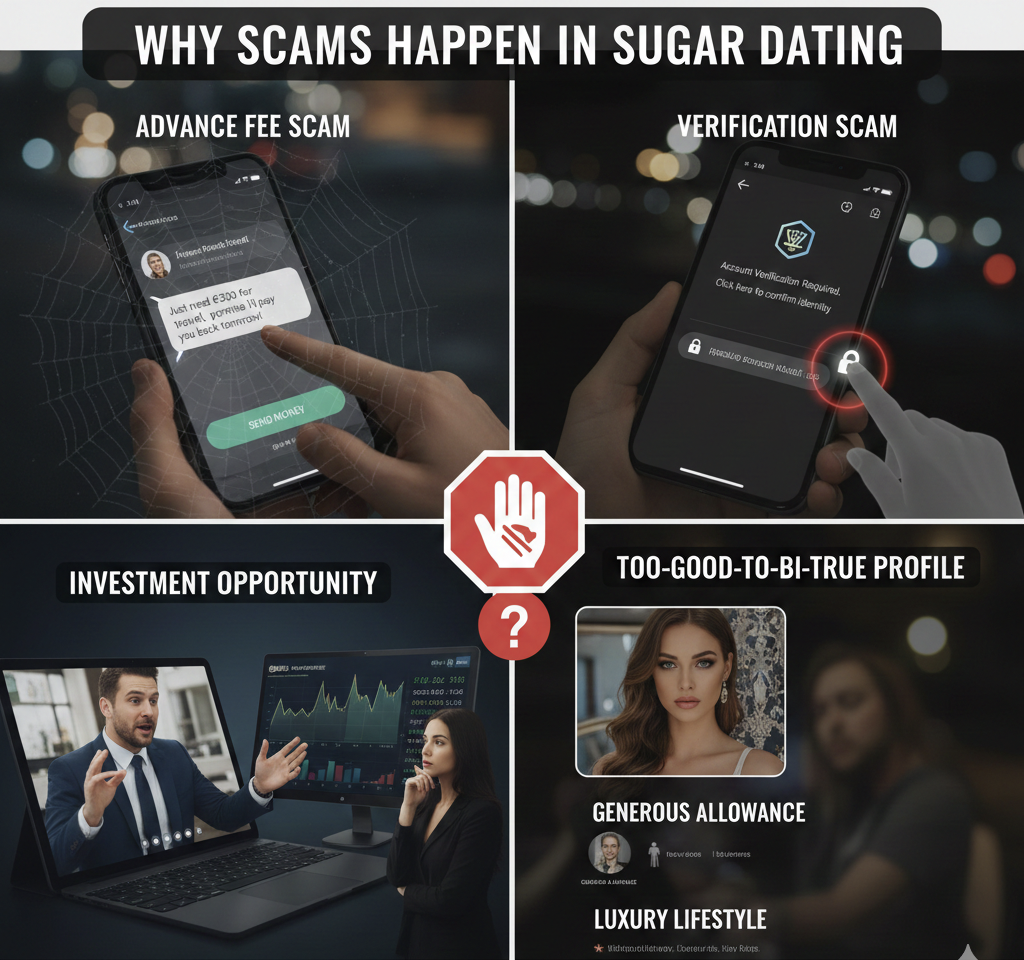
Why Scams Happen in Sugar Dating
Sugar dating involves money and relationships. That combination attracts people looking to exploit others.
Most people on sugar dating platforms are genuine. But scammers know this space exists, and they target it.
Ireland's sugar dating scene is smaller than in the US or UK. That means fewer scammers overall, but it doesn't mean zero.
Knowing what to look for keeps you safe.
The Advance Fee Scam
This is the most common scam in sugar dating.
Someone contacts you. They seem interested. The conversation moves quickly to arrangements.
Then they ask for money before you've met. Maybe it's for travel, a phone bill, or to "prove you're serious."
They promise to pay it back. They never do.
The rule is simple: Never send money to someone you haven't met in person.
If someone asks for money before a first date, they're not interested in you. They're interested in your wallet.
How This Scam Works in Ireland
In Ireland, advance fee scammers often claim to be in a nearby city. "I'm in Galway but I'd love to come to Dublin to meet you. I just need help with the train fare."
The amounts are usually small — €30, €50, €80. Small enough that you think "why not?" But once you send it, there's always another request. And another. The amounts grow, and the meeting never happens.
The Verification Scam
You receive a message asking you to verify your identity through a link.
The link looks official. It asks for your details, sometimes even payment information.
This is phishing. The link isn't from the platform. It's from a scammer trying to steal your information.
Real platforms don't ask you to verify through external links.
If you're asked to click a link to prove who you are, ignore it.
The Investment Opportunity
This one has become more common in recent years.
Someone builds a connection with you over days or weeks. They mention crypto, trading, or an investment that's working well for them.
They offer to help you invest. They send a link to a platform that looks legitimate.
You deposit money. You might even see "returns" on screen.
But when you try to withdraw, the money is gone. The platform was fake.
Sugar dating is about relationships, not investments.
If someone pivots from romance to financial advice, end the conversation.
The Irish Angle
These scams have targeted Irish users specifically, sometimes referencing Irish banks, Irish tax advantages, or even claiming to work in the IFSC. The veneer of local knowledge makes them more convincing.
If anyone on a dating platform of any kind starts talking about investments, treat it as a red flag regardless of how genuine the connection feels.
The Too-Good-To-Be-True Profile
Some profiles look perfect. Professional photos, exciting lifestyle, generous offers upfront.
But they won't video call. They won't meet in public first. They want to move the conversation off the platform immediately.
Genuine sugar daddies and sugar babies want to meet. They understand that trust is built over time.
If someone seems too perfect and pushes too fast, slow down.
The Gift Card Scam
A newer variant that targets sugar babies specifically.
A "sugar daddy" offers a generous allowance. But instead of cash or bank transfer, they want to send it via gift cards. Or they ask you to buy gift cards and they'll "reimburse" you.
Gift cards are untraceable. Once the codes are shared, the money is gone.
Legitimate sugar daddies don't pay in gift cards. If someone insists on this payment method, it's a scam.
The Fake Sugar Daddy / Pay-Per-Message Scam
Some scammers pose as wealthy sugar daddies but redirect you to a "private messaging platform" where you need to pay to send messages.
These platforms are owned by the scammers themselves. Every message you pay for goes directly into their pocket.
If someone asks you to move to a paid messaging platform, block them immediately.
Red Flags to Watch For
- Requests for money before meeting
- Pressure to move off the platform immediately
- Refusal to video call or meet in a public place
- Sob stories designed to trigger your sympathy
- Vague answers about their life, work, or intentions
- Links to external websites for "verification"
- Talk of investments, crypto, or financial opportunities
- Offers that seem too generous for someone who hasn't met you
- Reluctance to share any real information about themselves
- Perfect English combined with a claim to be "local" but never available to meet
Protecting Your Financial Information
Beyond avoiding scams, protect your financial details proactively:
- Never share your bank login details with anyone you've met online
- Be cautious with bank transfers. They reveal your full name and bank details. Consider alternatives like Revolut for initial transactions
- Don't send photos of identification documents. No legitimate arrangement requires this
- Monitor your accounts. If you've shared any financial information with someone who turned out to be suspicious, contact your bank immediately
What To Do If You Encounter a Scam
- Stop responding. Don't try to outsmart them. Scammers do this professionally
- Report the profile. Every report helps protect others
- Never share financial details. If you already have, contact your bank
- Don't blame yourself. Scammers are professionals. They do this all day
- Report to authorities. In Ireland, you can report online fraud to An Garda Síochána through their online portal or by calling your local station. You can also report to the Competition and Consumer Protection Commission (CCPC)
How SugarBowl.ie Addresses This
We manually review profiles before they go live.
This doesn't catch everything, but it removes obvious fakes and spam accounts.
If a profile passes review and later turns out to be a scam, report it. We act on reports quickly.
Our moderation is human, not automated. Real people review reports and make decisions. In a small community like Ireland's, that personal attention makes a real difference.
Final Thoughts
Most people in the Irish sugar dating scene are genuine.
But scammers exist, and they're good at what they do.
The best protection is awareness. If something feels wrong, trust that instinct.
Never send money before meeting. Never click suspicious links. Never trust investment advice from a dating profile.
Stay cautious, and you'll be fine.